

Have you ever discovered scratches on your front door, bedroom door, or door frame and wondered what caused the damage? Door scratching is a common behavior in dogs and can be frustrating for owners. Not only can it damage your home, but it may also indicate that your dog is experiencing anxiety, boredom, frustration, or another unmet need.
Understanding why dogs scratch doors is the first step toward addressing the behavior. Once you identify the underlying cause, you can develop a plan to help your dog feel more comfortable and prevent future damage.
Why Dogs Scratch Doors
Dogs scratch doors for many different reasons. In some cases, they are trying to gain access to a person, another pet, or an outdoor area. In other cases, scratching may be related to anxiety, boredom, excitement, or habit.
Some of the most common reasons dogs scratch doors include:
- Separation anxiety
- Barrier frustration
- Attention-seeking behavior
- Boredom and excess energy
- Habitual behavior
- Desire to access people, pets, or outdoor spaces
Because there are several possible causes, there is no one-size-fits-all solution. Understanding why dogs scratch doors in your specific situation will help you choose the most effective approach.
Common Challenges and Consequences
While occasional scratching may seem harmless, repeated scratching can create several challenges for both dogs and their owners.
Common consequences include:
- Damaged paint, trim, and door surfaces
- Scratched woodwork and flooring near doors
- Increased frustration and stress for owners
- Potential injuries to paws and nails
- Escalation of destructive behaviors over time
In some cases, door scratching becomes a self-reinforcing habit. The longer it continues, the more difficult it can be to change. Addressing the behavior early often leads to better outcomes.
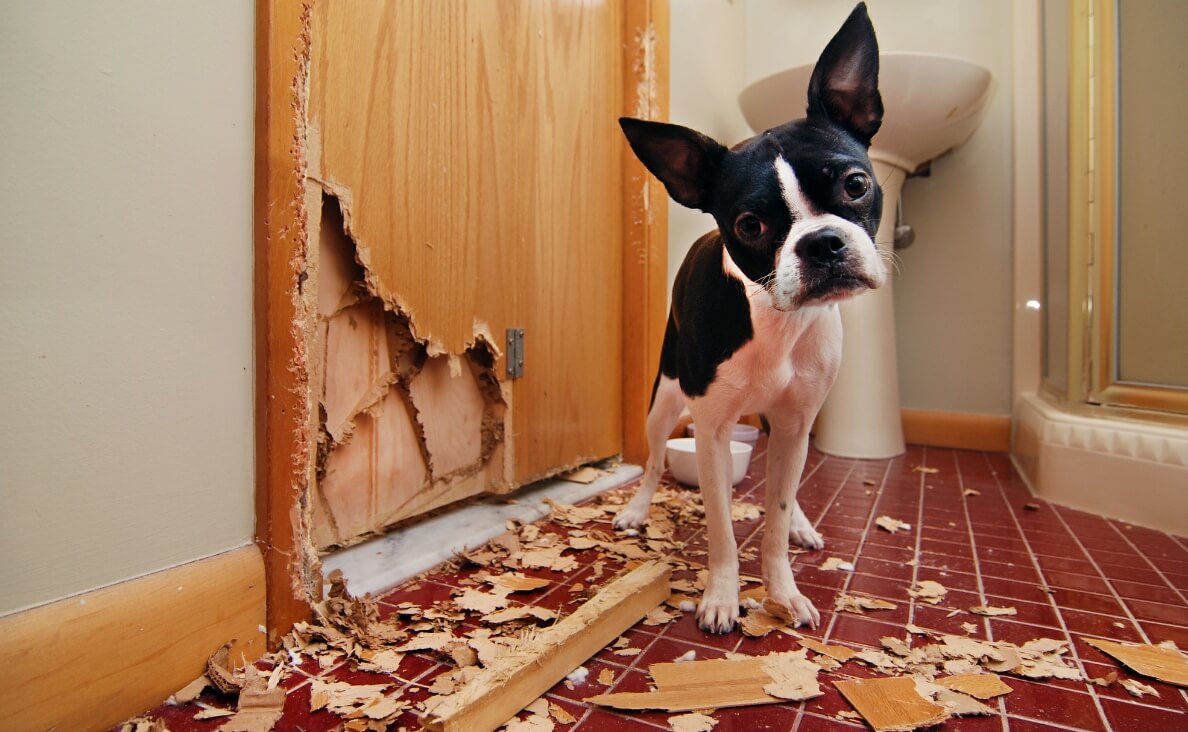
Why Dogs Scratch Doors When Left Alone
One of the most common explanations for door scratching is separation-related distress.
Separation Anxiety
Dogs are social animals that form strong bonds with their families. Some dogs experience significant stress when left alone. They may scratch doors in an attempt to reunite with their owners or escape confinement.
Dogs with separation anxiety often scratch at exit doors, windows, or areas associated with their family’s departure.
Signs of Separation Anxiety
In addition to scratching doors, dogs with separation anxiety may display:
- Excessive barking or whining
- Pacing
- Destructive chewing
- Attempts to escape
- House-soiling despite being house-trained
- Excessive drooling or panting
Departure Triggers
Many dogs learn to associate certain activities with being left alone. These triggers may include:
- Picking up keys
- Putting on shoes
- Grabbing a purse or backpack
- Turning off lights
- Following a departure routine
Recognizing these triggers can help owners better understand their dog’s behavior and develop an effective training plan.
How to Identify the Root Cause
Before attempting to stop door scratching, it is important to determine why the behavior is occurring.
Observe When the Behavior Occurs
Ask yourself:
- Does the scratching happen only when you leave?
- Does it occur when a specific door is closed?
- Does it happen at certain times of day?
- Is another person or pet on the other side of the door?
Consider Your Dog’s Emotional State
Your dog’s emotional state can provide valuable clues.
Is your dog:
- Anxious?
- Excited?
- Frustrated?
- Bored?
- Seeking attention?
Look for Patterns
Pay attention to which doors are targeted and what happens immediately before and after the scratching begins.
The more information you gather, the easier it becomes to identify the root cause and create an effective solution.

How to Stop Your Dog from Scratching Doors
Once you understand why dogs scratch doors, you can begin addressing the underlying issue.
Modify Your Dog’s Environment
Simple environmental changes can often reduce scratching behavior.
Consider:
- Creating a comfortable resting area
- Limiting access to trigger locations
- Using visual barriers when appropriate
- Reducing exposure to outdoor distractions
Management strategies can help prevent the behavior while training is underway.
Reinforce Positive Behavior
Rather than focusing on punishment, reward the behaviors you want to see.
For example:
- Reward calm behavior away from doors
- Reinforce settling on a bed or mat
- Praise relaxed behavior when a door is closed
Positive reinforcement helps dogs learn appropriate alternatives.
Use Consistent Commands
Teaching clear cues can help redirect your dog when they become focused on a door.
Helpful commands may include:
- Place
- Settle
- Wait
- Go to bed
Consistency is important. Everyone in the household should use the same commands and expectations.
Address Anxiety
If anxiety is contributing to the behavior, gradual training is often necessary.
Helpful strategies may include:
- Practicing short departures
- Teaching independence skills
- Creating positive associations with alone time
- Avoiding dramatic arrivals and departures
Dogs with severe separation anxiety may benefit from guidance from a qualified trainer or veterinary behaviorist.
Offer Mental and Physical Stimulation
Many dogs scratch doors simply because they have excess energy or insufficient mental stimulation.
Provide opportunities for:
- Daily exercise
- Walks and play sessions
- Training activities
- Food puzzles
- Enrichment toys
- Problem-solving games
Meeting your dog’s physical and mental needs often reduces unwanted behaviors throughout the home.
Maintain a Consistent Schedule
Dogs thrive on routine.
A predictable schedule for meals, walks, playtime, and rest can help reduce stress and uncertainty.
Consistency helps many dogs feel more secure and confident in their environment.

Tips for Specific Situations
Dealing with Persistent Scratchers
Some dogs continue scratching despite initial training efforts.
If this occurs:
- Remain patient
- Focus on identifying the root cause
- Avoid punishment-based methods
- Continue reinforcing alternative behaviors
Behavior change often takes time, especially if the behavior has been practiced for months or years.
Puppies vs. Adult Dogs
Puppies
Puppies may scratch doors due to:
- Curiosity
- Exploration
- Excitement
- Lack of training
Early guidance and consistency can help prevent the behavior from becoming a habit.
Adult Dogs
Adult dogs are more likely to scratch doors because of:
- Anxiety
- Frustration
- Established habits
- Learned behaviors
Understanding the motivation behind the behavior is especially important for adult dogs.
Breed Considerations
While any dog can scratch doors, some breeds may require additional mental and physical stimulation.
Examples include:
- Herding breeds
- Working breeds
- Sporting breeds
These dogs often benefit from structured exercise, enrichment, and training activities that provide an outlet for their natural instincts.
Tools and Products That Can Help
Certain products can help protect your home while you work on training.
Door Shields and Covers
Temporary door protectors can reduce damage while behavior modification is underway.
Protective Films
Clear protective films can help protect painted surfaces from scratches.
Pet Gates
Pet gates may help manage access to certain areas without completely isolating your dog.
Crates and Exercise Pens
When used appropriately, crates and exercise pens can provide safe management options for some dogs.
It is important to remember that management tools help prevent damage but do not address the underlying cause of the behavior. Long-term success requires identifying and addressing why dogs scratch doors in the first place.

Preventative Measures for Long-Term Success
Preventing future door scratching begins with meeting your dog’s needs consistently.
Meet Physical Needs
Provide exercise appropriate for your dog’s:
- Age
- Breed
- Health status
- Energy level
Meet Mental Needs
Mental stimulation is just as important as physical exercise.
Include:
Build Independence Skills
Help your dog learn to relax when separated from family members.
Gradually increasing independence can improve confidence and reduce anxiety-related behaviors.
Stay Consistent
Consistency is one of the most important factors in behavior change.
Dogs learn best when expectations remain clear and predictable.
How Canine Campus Can Help
While training is often necessary to address door scratching, many dogs benefit from additional physical exercise, mental stimulation, and social interaction throughout the week.
Over the years, we’ve seen many dogs become more confident through regular daycare participation. Consistent routines, positive social experiences, exercise, and enrichment can help dogs develop important life skills and build resilience. While daycare may not be a cure for separation anxiety, it can be an important part of helping some dogs feel more secure, confident, and fulfilled.
If your dog is scratching doors, showing signs of boredom, or struggling with time alone, we’d love to meet you and discuss whether daycare may be a good fit.
Frequently Asked Questions
Why does my dog scratch the door when I leave?
Many dogs scratch doors when their owners leave due to separation anxiety, frustration, or a desire to follow their family members.
Why does my dog scratch my bedroom door at night?
Your dog may want access to you, feel isolated, hear noises, or simply have developed a habit of scratching when separated from family members.
Is door scratching a sign of separation anxiety?
It can be. However, boredom, excitement, attention-seeking, and barrier frustration may also contribute to the behavior.
Should I punish my dog for scratching doors?
Punishment is generally not recommended. It may increase anxiety and fail to address the underlying cause of the behavior.
Will daycare help a dog that scratches doors?
For some dogs, daycare can help reduce boredom and provide valuable exercise, enrichment, and social interaction. However, dogs experiencing severe separation anxiety may also need a structured training plan.
How long does it take to stop door-scratching behavior?
The timeline varies depending on the cause, how long the behavior has been occurring, and the consistency of training efforts.
Final Thoughts
Door scratching can be frustrating, but it is often a sign that your dog is trying to communicate a need. Whether the behavior is caused by anxiety, boredom, frustration, excitement, or habit, identifying the root cause is essential for long-term success.
By providing appropriate exercise, mental stimulation, consistent training, and a predictable routine, many dogs can learn healthier ways to cope and communicate.
Do you think your dog’s door scratching is caused by boredom, anxiety, excitement, or something else? Tell us about your dog in the comments—we’d love to hear your thoughts.
 How to Train Your Puppy to Stop Biting
 How to Prevent Unwanted Food Guarding in Dogs
 What You Should Know About Our New Dog Obedience Training Program
 How to Teach Your Dog to Speak with Dog Talking Buttons
 [FREE DOWNLOAD] Do All of Those Daycare Dogs Get Along?




Leave a Reply