
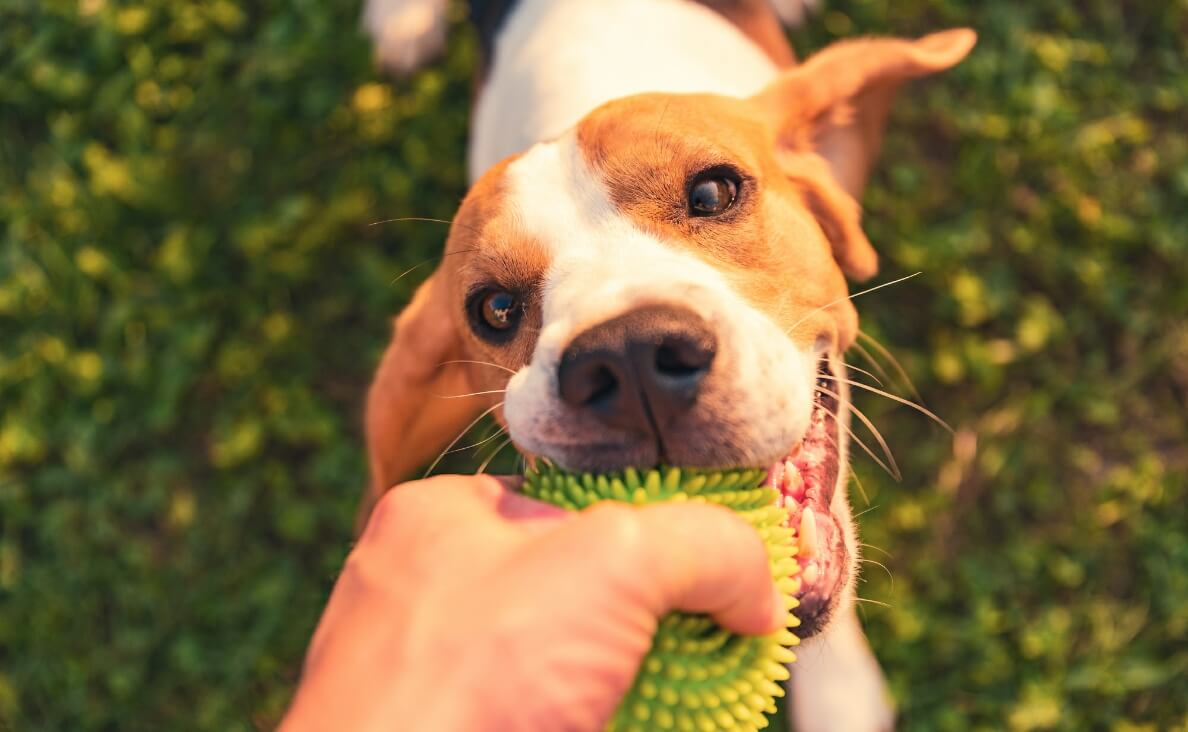
Every dog parent knows that moment — your pup grabs a toy, sock, or mystery item and refuses to let go. While it might look cute, teaching your dog to “drop it” is more than a neat trick. It’s one of the most important safety cues you can teach. Whether you’re preventing a swallowed stick or ending a game of tug on your terms, this simple command builds trust, confidence, and cooperation.
Let’s look at why this skill matters and how to teach it step by step using gentle, positive reinforcement.
Why You Should Teach “Drop It”
Learning how to teach your dog to drop it does more than make playtime smoother — it can actually save your dog’s life.
Here’s why it matters:
- Safety first: Dogs explore with their mouths. Teaching “drop it” prevents them from swallowing or chewing unsafe objects.
- Better play sessions: Games like fetch and tug stay lighthearted when your dog willingly releases toys.
- Builds trust and communication: Dogs learn that giving something up doesn’t mean losing out — it means more fun ahead.
- Encourages self-control: Practicing this cue helps your dog manage excitement and frustration.
At Canine Campus, we use this command daily with dogs during group play to keep interactions safe and enjoyable for everyone.
What You’ll Need Before You Start
Training is more successful when you prepare ahead. Gather these essentials:
- High-value treats — something better than the toy you’re using.
- Two toys — identical or similar for fair trades.
- A calm, quiet space — start without distractions.
- Patience and positivity — keep sessions short, upbeat, and reward-based.
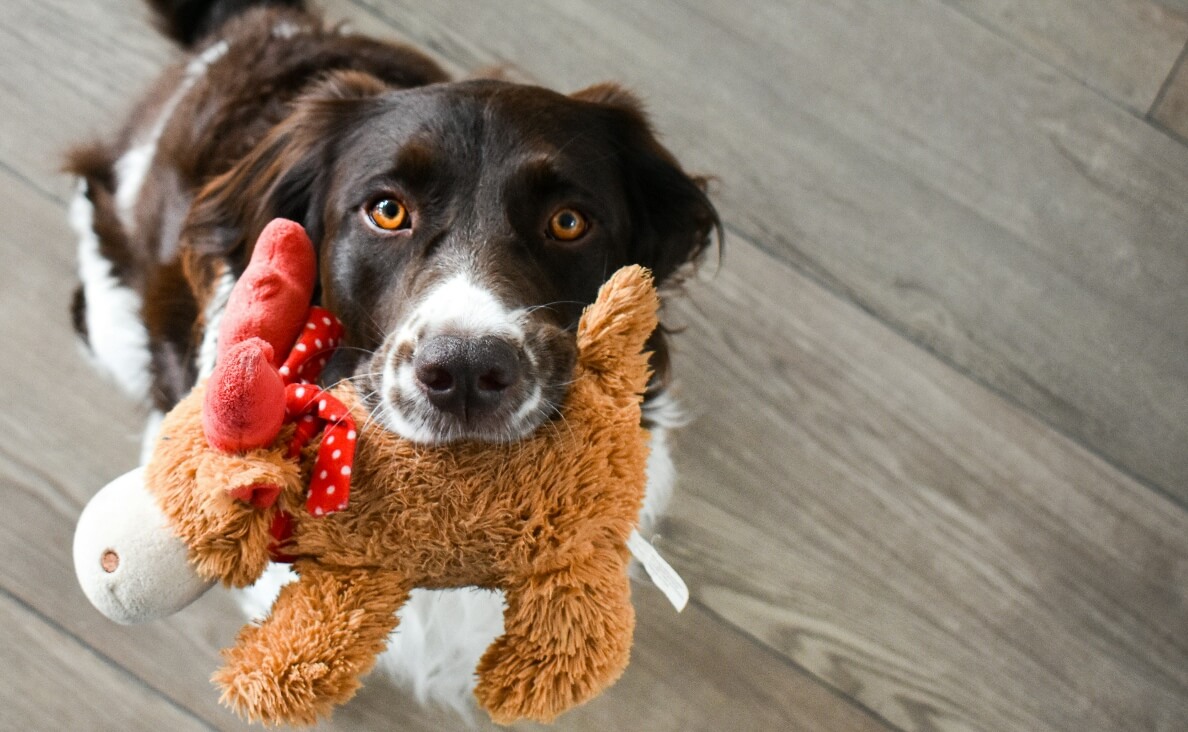
How to Teach “Drop It” Using a Treat
Step 1 — Start Simple
- Begin by playing gently with a toy your dog enjoys.
- When your dog has the toy in their mouth, say “Drop it” once in a calm, cheerful tone.
- Hold a treat right near their nose — most dogs will release the toy to grab the snack.
- The instant the toy drops, praise and reward.
- Return the toy and repeat several times.
Keep sessions short — around five minutes — and always end on success. Over time, your dog will connect “drop it” with letting go and getting something good in return.
How to Teach “Drop It” Using a Toy
Step 2 — The “Trade” Game
Once your dog understands the concept, it’s time to teach that dropping the toy doesn’t end the fun — it keeps it going.
- Offer a second toy while your dog holds the first.
- Say “Drop it.”
- As soon as your dog lets go, begin playing with the new toy right away.
This turns the exercise into a game of trust rather than a loss. Dogs love knowing that cooperation leads to more play.
Step 3 — Add Duration and Distance
Gradually make it a little harder:
- Ask for “drop it” when your dog is a few feet away.
- Add mild distractions.
- Delay the reward slightly to increase patience and reliability.
Consistency and timing are key. Always mark the release with praise or a clicker to reinforce that exact behavior.
What to Do If Your Dog Won’t Drop Something Dangerous
Sometimes your dog grabs something unsafe — a chicken bone, sock, or random street find. Stay calm.
- Avoid chasing. Moving toward your dog often makes them run. Step back and use a cheerful tone instead.
- Trade up. Offer a high-value treat or favorite toy in exchange.
- Distract, don’t grab. Grabbing can trigger fear or guarding.
- Once the item is safe, reset. Practice the “drop it” cue later with low-value items to rebuild confidence.
If your dog might swallow or choke, call your vet immediately — safety comes first.
What to Do If Your Dog Gets Aggressive
If your dog growls, stiffens, or shows their teeth when you approach an item, you may be dealing with resource guarding, not disobedience.
- Step back calmly — never punish or yell.
- Avoid forcing the object away; this increases fear and defensiveness.
- Work on “trade” exercises with low-value toys and high-value treats to rebuild trust.
- Seek help from a certified positive-reinforcement trainer for personalized guidance.
At Canine Campus, we’ve seen remarkable progress in dogs who once guarded toys — with patience and positive association, they learn that letting go is safe.
What to Avoid When Teaching Your Dog to Drop It
A few common mistakes can slow progress:
- Repeating the cue too often. Say it once; wait for action before repeating.
- Using force. Pulling or prying the item away can cause stress or resistance.
- Punishing mistakes. Fear damages trust; keep training playful and light.
- Training too long. Dogs learn best in short bursts — stop while they’re still eager.
When to Get Help from a Trainer
Sometimes, professional help is the best next step. Contact a qualified trainer if:
- Your dog guards toys, food, or stolen objects.
- They growl or snap when you approach.
- They ignore the cue despite consistent practice.
- You feel anxious or unsafe.
A positive reinforcement trainer can create a customized plan to help your dog learn safely and happily.
Make It a Game!
Once your dog masters “drop it,” make it part of everyday fun:
- Tug & Drop: Play tug, then cue “drop it,” reward, and resume play.
- Fetch by the Rules: Only throw again once the toy is dropped.
- Hide & Seek: Ask for “drop it” after your dog finds a hidden toy.
Games turn practice into bonding time — and that consistency keeps the cue strong.
Drop It FAQs
Q1: How long does it take to teach “drop it”?
Most dogs learn within a few days of short, consistent sessions — though every dog’s pace is different.
Q2: Can I teach “drop it” without treats?
Yes! Use toy trades or enthusiastic praise, but treats usually speed up learning.
Q3: Is “leave it” the same as “drop it”?
Not quite. “Leave it” means don’t pick it up. “Drop it” means let go of what’s already in your mouth.
Q4: What if my dog only listens indoors?
Dogs need to generalize cues. Practice in multiple places, gradually adding distractions.
Q5: Should I use a clicker?
Absolutely! A clicker helps mark the exact moment your dog releases the toy, making learning faster.
Final Thoughts
“Drop it” is one of the most valuable cues you’ll ever teach your dog. It keeps them safe, makes playtime smoother, and deepens your bond through trust and positive communication.
Practice for just a few minutes each day, stay patient, and celebrate progress. Before long, your dog will proudly show off their new skill — and you’ll both enjoy safer, happier playtime together.
What’s the funniest or most surprising thing your dog has ever refused to drop? Share your story in the comments below! 🐶🎾
 What You Should Know About Our New Dog Obedience Training Program
 9 Tips for Getting Your Dog to Stop Barking
 Honoring America’s Military Dogs
 15 Ways to Enhance Your Dog’s Learning Ability
 How to Socialize a Shy Dog (Without Overwhelming Them)




Leave a Reply