
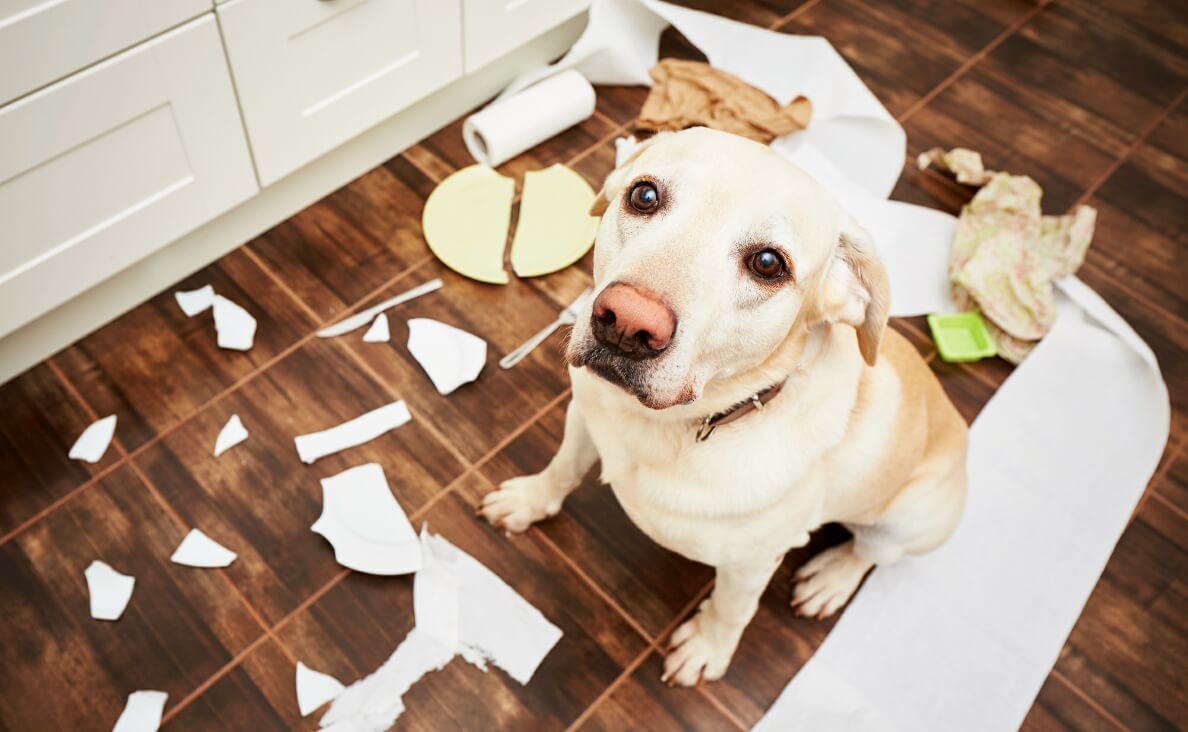
Bringing a dog into your home fills every corner with joy — but also, sometimes, with chewed shoes, scratched doors, or dug-up gardens. Whether you share your space with a curious puppy or an energetic adult dog, knowing how to dog proof your home keeps both your belongings and your best friend safe.
Dog-proofing isn’t about restricting your dog’s fun. It’s about understanding their instincts and setting up an environment that prevents frustration and boredom. With a few smart adjustments, you can keep your home peaceful — and your pup happy and healthy.
Related: How to Puppy-Proof Your Home
Why Dogs Dig, Chew, and Scratch
Chewing, digging, and scratching are all normal canine behaviors. Dogs explore the world through their mouths and paws, and when they feel bored, anxious, or under-exercised, they often turn that energy toward your furniture or floors.
Chewing relieves teething pain in puppies and stress in adult dogs.
Digging is instinctive — some dogs are bred for it, while others do it to stay cool or hide treasured toys.
Scratching helps dogs stretch, mark territory, or get attention.
The good news? These habits can be redirected with a balance of enrichment, structure, and prevention. The key to dog-proofing your home is anticipating what might tempt your dog — and giving them a better option.

How to Dog Proof Your Home Room by Room
Living Room
The living room is full of irresistible chew targets — cords, pillows, remotes, and soft furniture.
- Tuck away or cover electrical cords using cord protectors or furniture placement.
- Move plants and décor to higher shelves. Some houseplants are toxic to pets.
- Cover furniture with washable throws or slipcovers to protect against fur and drool.
- Offer a designated chew toy basket to keep your dog busy while you relax.
A calm, organized living room helps your dog feel secure and gives them fewer reasons to misbehave.
Kitchen and Dining Area
The kitchen smells like heaven to a dog — which makes it a top priority for dog-proofing.
- Store food and trash in sturdy, lidded containers or behind closed cabinets.
- Keep countertops clear of tempting snacks. Dogs can easily counter-surf when left alone.
- Secure cleaning products and chemicals out of reach.
- Create a feeding station away from busy walkways, helping your dog associate mealtime with calm and focus.
Avoid leaving food unattended on counters or tables — even the most polite pups can’t resist temptation forever.

Bedroom and Bathroom
These cozy spaces often hide small, dangerous items that dogs love to chew.
- Keep laundry, tissues, and shoes off the floor.
- Close closet doors and toilet lids — curious noses and tails can get into trouble fast.
- Store lotions, medications, and razors out of reach.
- Use pet-safe air fresheners or diffusers — many essential oils are toxic to pets.
Make the bedroom and bathroom quiet retreat zones, where your dog can nap safely without access to harmful objects.
Garage
The garage may seem harmless, but it’s often filled with dangerous chemicals and sharp objects.
- Keep antifreeze, paint, and cleaning products sealed and stored high on shelves or in locked cabinets.
- Sweep up nails, screws, and sawdust regularly.
- Store fertilizers and pesticides safely away from paws and noses.
- Never leave your dog unattended in the garage — temperature extremes and fumes can be hazardous.
A little organization in this space can prevent major accidents.
Yard and Garden
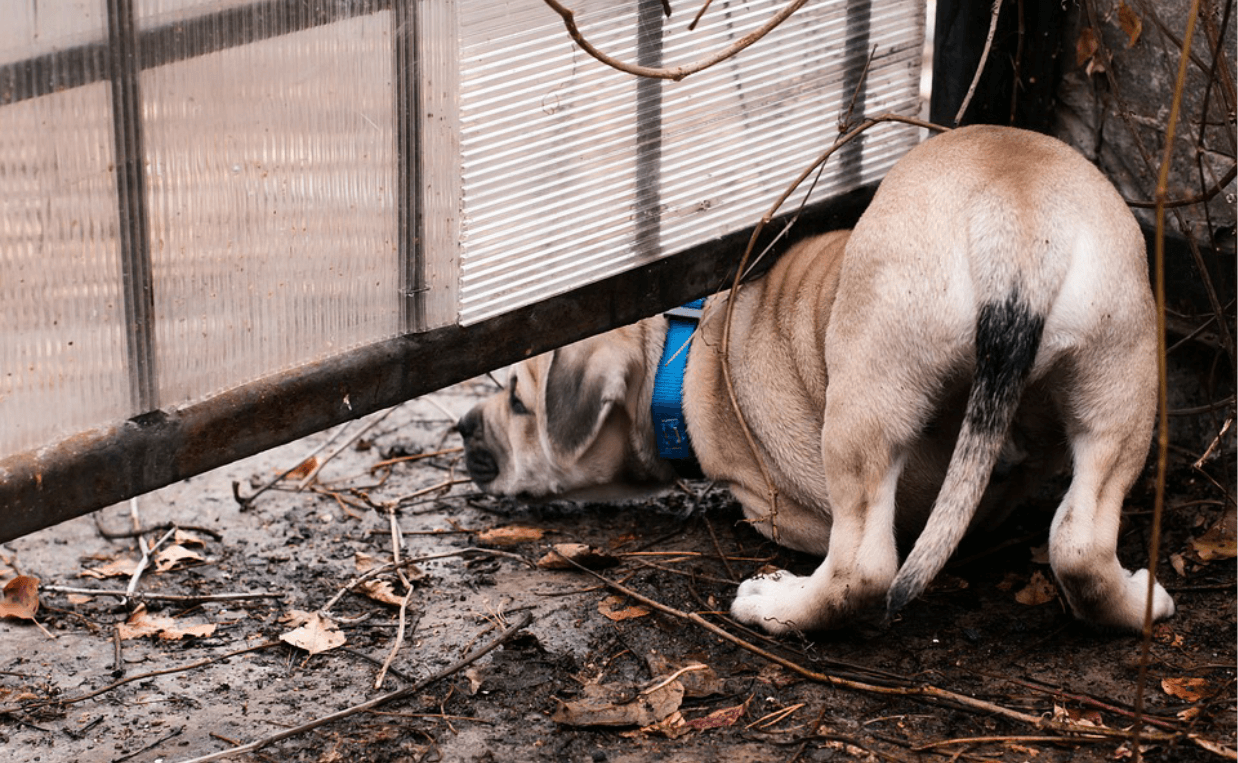
For dogs who love to dig, the yard is paradise — but it can quickly become a mess without boundaries.
- Check fences and gates for gaps or weak spots. Escape artists will find them fast.
- Designate a “legal” digging area, like a corner sandbox, to redirect the urge.
- Remove or fence off toxic plants, sharp sticks, or garden tools.
- Provide shade and fresh water to prevent overheating in warmer months.
If you garden, keep dogs away from fertilizer, compost, and mulch — many contain ingredients that can cause stomach upset or toxicity.
Related: 14 Solutions for Dogs Who Dig Under Fences
Chewing: Prevention and Solutions
Chewing is natural but destructive when focused on furniture or shoes. The goal isn’t to stop chewing — it’s to make it safe and appropriate.
- Offer a variety of chew toys — rubber, rope, and edible chews provide texture and mental stimulation.
- Rotate toys every few days so your dog doesn’t get bored.
- Use bitter spray deterrents on furniture legs or baseboards.
- Increase physical and mental exercise: more walks, playtime, or food puzzles reduce boredom.
- Supervise and confine when necessary. If you can’t watch your dog, use a crate or playpen stocked with safe chew options.
Reward calm chewing on the right objects to reinforce good habits.
Digging: Prevention and Redirection
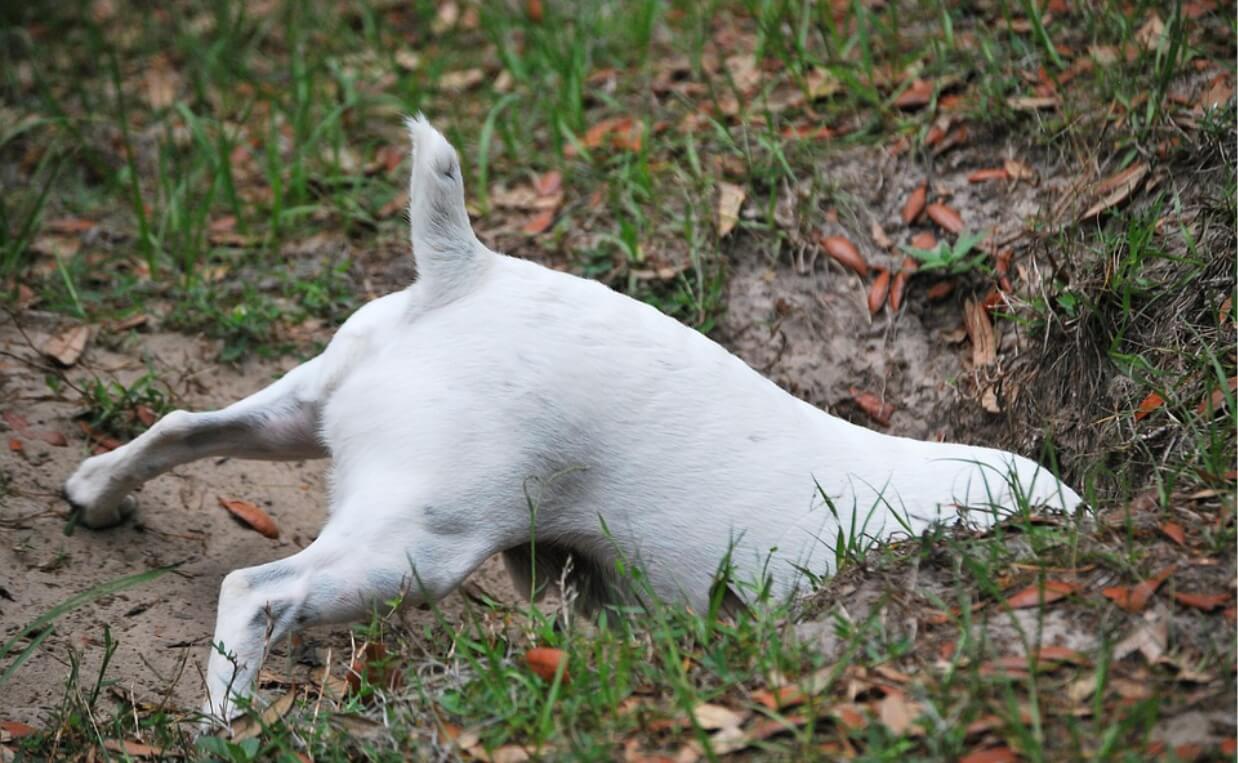
Dogs dig for many reasons — to cool off, bury treasures, or burn off energy. Redirect the behavior rather than punish it.
- Create a designated digging zone using sand or loose soil. Hide treats or toys there.
- Offer daily exercise to prevent pent-up energy.
- Block favorite digging spots with landscape fabric, rocks, or mesh.
- Dissuade digging near fences by placing chicken wire or large stones along the base.
When dogs have a permitted outlet, they’re far less likely to destroy your garden beds.
Scratching: Managing Doors, Floors, and Furniture
Scratching often happens out of excitement or stress — like when greeting family members or hearing someone outside.
- Keep nails trimmed to reduce surface damage.
- Protect door edges and corners with clear acrylic panels or guards.
- Place rugs or mats near doors to minimize scuffing on wood floors.
- Teach a calm “sit-stay” for greetings to prevent door scratching.
Offer scratching posts or textured mats for dogs who enjoy that sensation — it gives them a satisfying, acceptable alternative.

Dog-Proofing Essentials: Products Worth Trying
A few clever tools can make life easier while protecting your space:
- Cord protectors for electronics and lamps.
- Pet-safe bitter sprays to deter chewing.
- Heavy-duty chew toys like KONG or Benebone.
- Scratch guards for doors and furniture.
- Enrichment puzzles and lick mats to relieve boredom.
Remember: prevention tools work best alongside exercise, mental stimulation, and positive training.
When to Seek Professional Help
If your dog’s chewing, digging, or scratching becomes excessive, it might signal stress, separation anxiety, or underlying medical issues.
- Talk to your veterinarian to rule out health causes.
- Consult a certified dog trainer or behaviorist for tailored strategies.
- Use daycare or enrichment services (like those offered at Canine Campus!) to give your pup healthy social outlets.
Addressing the root cause early prevents frustration for both you and your dog.

Conclusion
Learning how to dog proof your home is really about harmony — balancing your dog’s natural instincts with a safe, well-organized environment. With a few thoughtful changes, you can stop the chewing, digging, and scratching before it starts, while giving your dog the comfort and stimulation they need.
Every home — and every dog — is different, so start with the tips that fit your lifestyle. Over time, you’ll find that dog-proofing isn’t about restriction; it’s about freedom — the freedom for your dog to explore safely and for you to relax without worry.
What’s the most creative way you’ve dog-proofed your home? Share your ideas in the comments — your tip might help another pet parent keep their home (and sanity) intact!
 When Is It OK to Leave Your Dog in the Car?
 Common Sense and a Little Extra Care for the Dog Days of Summer
 6 Disaster Preparedness Tips to Keep Your Dog Safe
 Top 6 Reasons to Spay or Neuter Your Dog
 Xylitol Poisoning in Dogs




Leave a Reply