

Understanding and stopping dog aggression towards cats is crucial for pet owners who wish to ensure a harmonious coexistence between their canine and feline companions. This issue, often stemming from natural instincts, territorial behavior, or lack of socialization, can lead to stressful and potentially dangerous situations. Here are practical tips to help you address and prevent dog aggression towards cats.
-
Understand the Root Cause
Before tackling dog aggression towards cats, it’s essential to understand why it occurs. Dogs are naturally predisposed to chase smaller animals, and this instinct can manifest as aggression. Additionally, territorial behavior, fear, or a lack of proper socialization with other animals can also contribute to this issue. Observing your dog’s behavior around cats and other animals can provide valuable insights into the cause of their aggression.
-
Early Socialization
One of the most effective ways to prevent dog aggression towards cats is through early socialization. Exposing your dog to cats in a controlled environment from a young age can help them learn that cats are not threats or prey. This early introduction can significantly reduce aggressive tendencies as your dog matures.

-
Training and Commands
Training plays a vital role in managing dog aggression towards cats. Basic obedience commands like ‘sit’, ‘stay’, ‘come’, and ‘leave it’ are crucial. These commands can help you control your dog’s behavior in the presence of a cat. Consistent training and reinforcement of these commands can help your dog understand the expected behavior.
-
Controlled Introductions
Introducing your dog to a cat should be a gradual and controlled process. Start with short, supervised sessions where both animals are present but kept at a safe distance. This can be done by using barriers like baby gates or keeping the dog on a leash. Gradually decrease the distance between them as your dog becomes more comfortable and less aggressive.
-
Create Safe Spaces
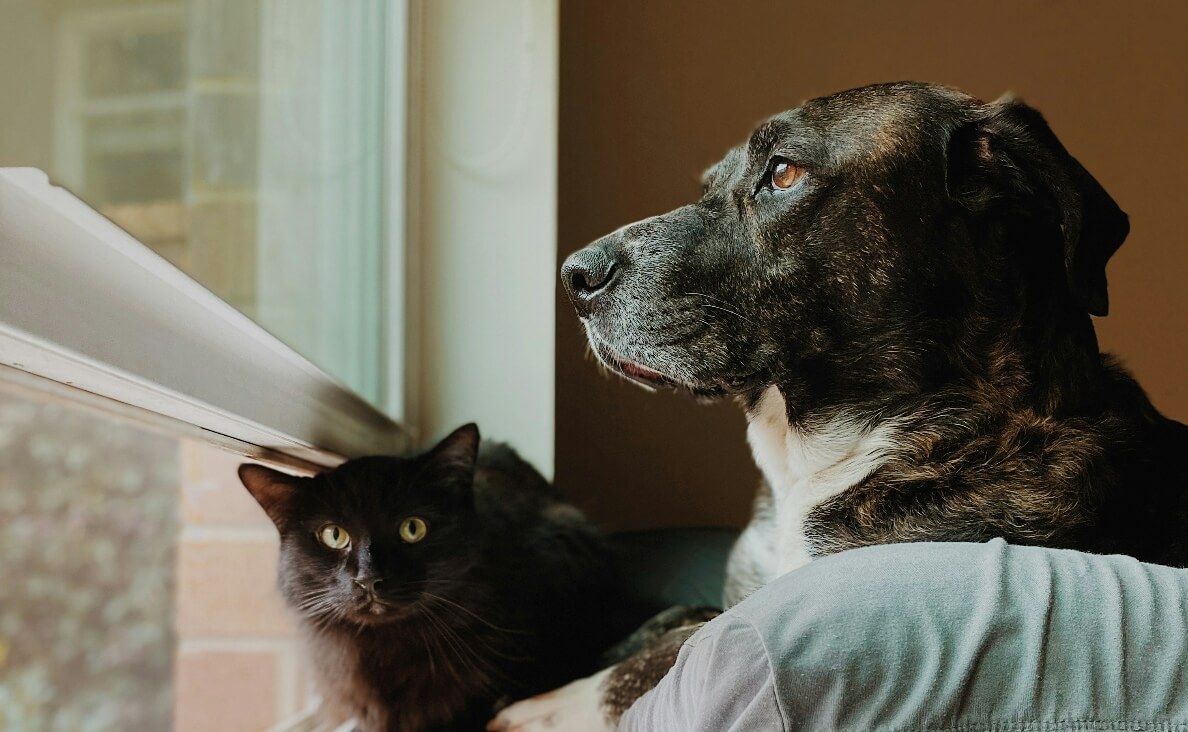
Ensure that your cat has safe, dog-free areas where they can retreat if they feel threatened. Cat trees, high shelves, or separate rooms accessible only to the cat can provide a safe haven. This not only helps in reducing stress for the cat but also prevents escalation of aggressive incidents.
-
Positive Reinforcement
Use positive reinforcement to encourage non-aggressive behavior from your dog. Reward your dog with treats, praise, or playtime whenever they behave calmly or show indifference towards the cat. This reinforcement helps your dog associate positive behavior with rewards, reducing their aggression over time.
-
Monitor Body Language
Paying close attention to your dog’s body language can give early warning signs of aggression. Growling, baring teeth, stiffening, and fixating on the cat are indicators of potential aggression. Intervening early when you notice these signs can prevent an aggressive encounter.
-
Exercise and Mental Stimulation
A well-exercised dog is generally less likely to exhibit aggressive behavior. Regular exercise helps to expend excess energy that might otherwise be directed towards aggressive tendencies. Mental stimulation through puzzle toys or training exercises can also help keep your dog’s mind engaged and less focused on the cat.

-
Professional Help
If your efforts to manage your dog’s aggression towards cats are not successful, it may be time to seek professional help. A certified animal behaviorist or a professional dog trainer experienced in dealing with aggression can provide personalized advice and training strategies based on your dog’s specific needs.
-
Patience and Consistency
Patience and consistency are key when addressing dog aggression towards cats. Behavior change does not happen overnight, and it’s important to be consistent in your training and management efforts. Celebrate small progress and be patient as your dog learns to coexist peacefully with your cat.

Final Thoughts
Dealing with dog aggression towards cats can be challenging, but with the right approach, it is possible to foster a peaceful relationship between your canine and feline pets. Understanding the root cause, providing early socialization, implementing training and controlled introductions, and seeking professional help if needed, are all critical steps. Remember, patience, consistency, and positive reinforcement are your best tools in this journey towards a harmonious multi-pet household.
Have you taught your dog to stop being aggressive toward a cat? What worked for you? Please share your experience in the comments below…
 6 Ways to Channel Your Busy Dog’s Energy
 How Intelligent is Your Dog?
 7 Ways to Tell Your Dog You Love Them
 6 Steps to Keep Your Puppy or Dog from Jumping Up
 Why Do Dogs Hump? How to Stop This Embarrassing Habit




I’m 67 and my entire life, 3yrs old and on, I’ve had dogs with cats harmoniously with zero issues. I’ve had every breed you can name , of dog, many ages, many locations, and never had any of my dogs, tiny, med and super large attack any of my cats. Lil one was sitting on recliner with me.. shed been hiding under the house 3 weeks when he 1st attempted to get her from high up.. I thought he was playing because he shows no aggression in the 3 weeks I’ve had him.. He’s mellow, obedient, 8 yrs old and rescued from our shelter.. great with kids, all ages as they said.
I’m so shocked, upset, traumatized by this I can’t think..
Truthfully, he tried to end her.. and she loves dogs, her bestie was my PutBoxerBull i got at 6mo, and he’d be rough, but never aggression to her, my older cat or anyone else.. my female dog was horrible to him, often attacking. Anyway, now I have Takodo, fixed male, and way calmer no aggression and is with me 24/7 .My lil one, split after this horror, shell never trust me again, as I said, he won’t hurt you and she was calm, expecting a new bestie.. and then, badaboom, Cujo transformed..*m recovering from hip surgery, and still managed to get him off her 2x, but he kept returning to her with ferocity only seen in Wildlife videos. I’m shaking still and this occurred at 4pm yesterday, it’s 5:30am now.
I was amazed how she tried to get away as she’s never had a fight, but he’s 90k strong and was determined to end her.. that I’m sure. She hurt him prob with nails kicking at him with hind legs.. but she was trying to get away, he was relentless.
8 adore this ole boy but, hell no, I can’t have Wild Kingdom in my livingrm.. and especially with her.. brain damage and cross eyed, sweetest animal alive as many disabled animals can be. I’ve trained for yrs, when younger, healthier and stronger, dogs, feral cats and 1300lb horses. I’ve never experienced this but it appeared he’s done this before..
I can’t keep him and I haven’t stopped crying yet. I refuse to have a cat killer in my home and it breaks my heart.
I can’t have her petrified again, after she trusted me enough to come back in the house thinking he’d be her new friend.
How can a calm, mellow obedient older dog even want to kill an innocent cat?
Having Never been thru this with any breed( her bestie a large PutBoxerBull, would sleep next to her.. she had no fear. Now she’s petrified and prob will never not be, due to brain damage born with.
My sweet pittie her bestie went to shelter when I was rushed to ER 2 surgeries later, no family member would take him while I was in hospital and he got adopted..they adore him and why not.
I’ll be taking him back today and there went my joy, feeling safe and happy.
I pray nobody ever has to witness such a horrific act, on an innocent baby, nor have this trauma in their life. .I’m sick and truly need time to get over this.. and I know lil one will never come in house again.. I pray she’s ok.. one strong courageous kittie to fight back as she did, and survive.. yet she only tried to survive, could’ve done some real damage but didn’t.. oh my
Thank you for sharing your experience. I’m so sorry you and your cat went through such a frightening and traumatic event.
What makes situations like this especially difficult is that a dog can be calm, affectionate, obedient, and wonderful with people, yet still have a strong instinct to chase or grab small animals. In some cases, this behavior is driven by prey drive rather than what we typically think of as aggression.
It sounds like you acted quickly and likely saved your cat’s life. Given your recent surgery, the size difference between the dog and cat, and the intensity of the incident, it’s completely understandable that you’re feeling shocked, heartbroken, and overwhelmed.
Please try not to blame yourself. Based on what you’ve described, there may not have been any obvious warning signs that this would happen. Many dogs live peacefully with people and other dogs while still being unsafe around cats.
Your first priority now is keeping both animals safe. If you feel that you cannot safely manage the situation or rebuild trust between them, returning the dog may be the most responsible decision for everyone involved.
We hope your cat returns home safely and continues to recover both physically and emotionally. Thank you for sharing your story—it serves as an important reminder that every dog is an individual, and introductions between dogs and cats should always be approached carefully, even when a dog seems calm and well-mannered.