
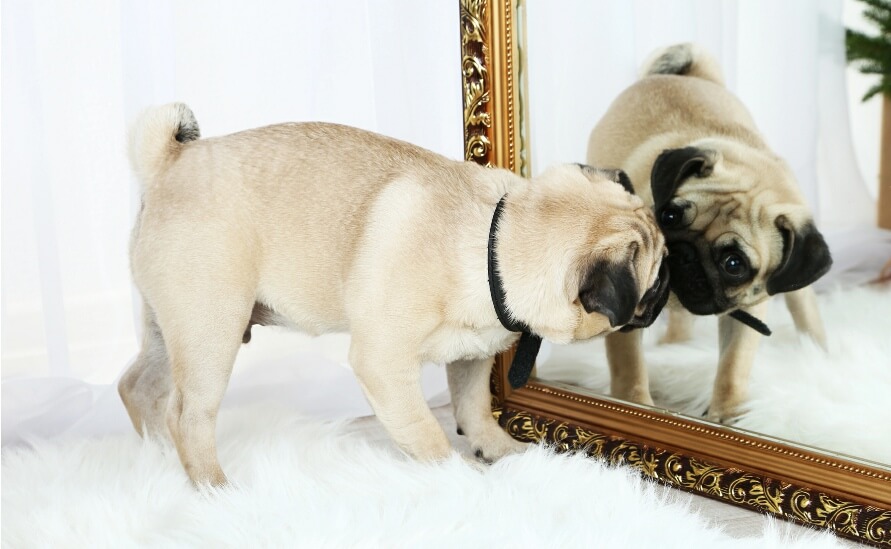
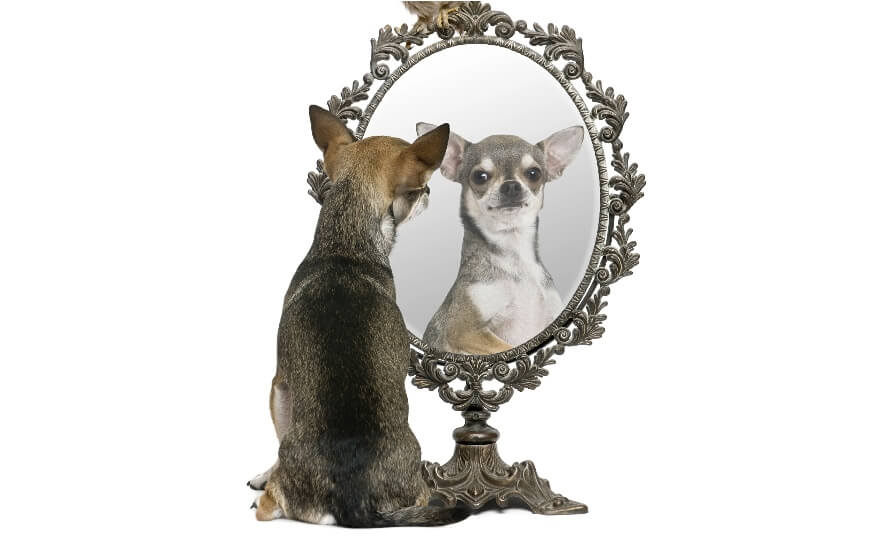
Many dog owners have watched their dog react to a mirror for the first time. Some dogs bark or growl at the reflection, while others tilt their heads curiously or ignore it altogether. These reactions naturally lead to an interesting question: can dogs see their reflection in a mirror? Understanding how dogs perceive mirrors reveals a lot about canine vision, scent, and awareness. While dogs can physically see the image in a mirror, their brains interpret it very differently from the way humans do.
Can Dogs See Their Reflection in a Mirror?
The simple answer is yes—dogs can see the image in a mirror. Like humans, their eyes detect light, shapes, and movement reflected back from the mirror’s surface. However, seeing an image does not mean the dog understands what the image represents.
Dogs rely far less on vision than humans do to interpret their environment. Instead, their primary sources of information are smell and sound. When dogs encounter another dog in real life, they expect certain signals such as scent, movement, and body language. A mirror reflection provides visual movement but lacks smell and other cues that dogs normally rely on to identify individuals.
Because of this, the reflection may initially confuse some dogs. The dog may think another animal is present but cannot find the expected scent. Others may lose interest quickly once they realize the image does not behave like a real dog.
So while dogs can see their reflection in a mirror, the bigger question is whether they recognize the reflection as themselves.
Testing Self-Awareness in Dogs
Scientists often study self-awareness in animals using what is known as the mirror self-recognition test. In this experiment, researchers place a small mark on an animal’s body in a location that cannot be seen without a mirror. If the animal uses the mirror to investigate or touch the mark on its own body, researchers interpret this behavior as evidence that the animal understands the reflection represents itself.
Humans typically pass this test at around 18 to 24 months of age. Several other animals have also demonstrated mirror self-recognition, including great apes, dolphins, elephants, and magpies.
Dogs, however, usually do not pass the mirror test. When presented with a mirror, most dogs do not investigate marks on their bodies or display behaviors that suggest they recognize the reflection as themselves.
At first glance, this might suggest that dogs lack self-awareness. But researchers now believe the situation is more complicated.
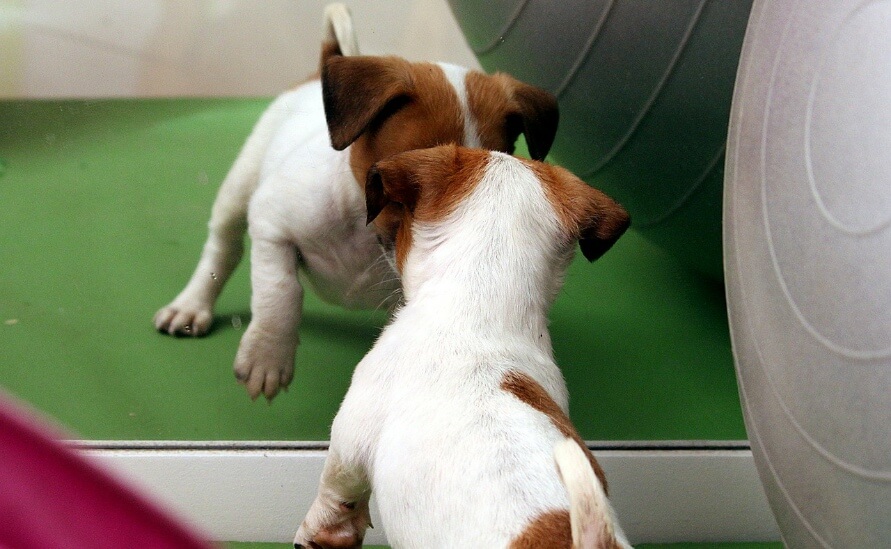
Dogs Often Fail Visual Awareness Tests
The reason dogs struggle with mirror tests may have less to do with intelligence and more to do with how dogs gather information about the world.
Humans rely heavily on vision to recognize individuals. We can look at a person across a room and immediately identify who they are. Dogs, however, identify individuals primarily through scent.
When a dog encounters another dog, the first instinct is usually to smell. Scent provides an enormous amount of information, including identity, emotional state, and even recent activities. A mirror reflection contains none of this information.
Because mirrors provide visual cues but no scent, they may simply not be a meaningful way for dogs to identify themselves or others. In many cases, dogs may ignore the reflection because it does not provide the sensory information they depend on most.
This has led researchers to explore alternative ways of studying canine self-awareness.
Dogs Identify Themselves by Scent, Not Sight
A fascinating experiment known as the “sniff test of self-recognition” suggests that dogs may recognize themselves through smell rather than sight.
In this type of experiment, researchers present dogs with samples of their own scent along with scents from other dogs. In some cases, the dog’s own scent is slightly altered with an additional odor. Scientists then observe how long the dog investigates each scent.
The results show that dogs often spend more time investigating altered versions of their own scent compared to their unaltered scent. This suggests that dogs recognize their own smell and notice when something about it has changed.
This finding indicates that dogs may possess a form of self-recognition that is based on scent rather than visual reflection. In other words, dogs might understand their identity in ways that mirrors simply cannot measure.
Because scent is such a powerful source of information for dogs, it plays a major role in how they interpret the world around them. In fact, dogs use their sense of smell for many specialized tasks, from search-and-rescue work to detecting medical conditions. You can explore this remarkable ability in our article 18 Unique Nose Work Jobs Only Dogs Can Do.
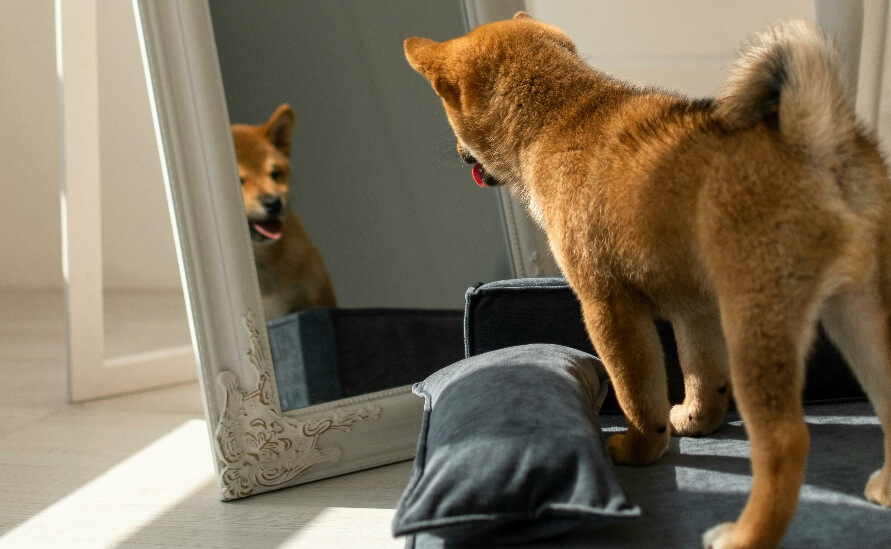
Dogs Can Show Other Forms of Self-Awareness
Although dogs rarely recognize themselves in mirrors, research suggests they demonstrate awareness in other ways.
Body Awareness
One well-known study explored whether dogs understand their own bodies as physical obstacles. In this experiment, a toy was attached to a small mat on which the dog was standing. To give the toy to the owner, the dog needed to pick it up—but the mat prevented the toy from moving.
Many dogs quickly realized that their own body weight was blocking the toy and stepped off the mat before attempting to retrieve it. This behavior suggests that dogs understand their body as an object in the environment that can affect outcomes.
Some highly trained dogs that use communication buttons have shown intriguing responses to mirrors. One well-known example is Bunny, a Sheepadoodle who communicates using more than 80 recordable buttons arranged on FluentPet HexTiles. Bunny appears able to recognize her owner when she sees her reflection in a mirror, suggesting dogs may be capable of identifying familiar individuals visually. However, recognizing another individual is different from recognizing oneself, and scientists are still studying whether dogs can truly achieve mirror self-recognition.
Dogs that learn this type of communication can demonstrate remarkable problem-solving and social awareness. If you’re curious about this method, you can learn more in our guide on how to teach your dog to speak with dog talking buttons.
Emotional Awareness
Dogs also demonstrate strong emotional awareness. Numerous studies show that dogs respond differently to human facial expressions and tone of voice. They can often distinguish between happy, angry, and sad emotions in their owners.
Dogs frequently adjust their behavior based on human emotional cues. For example, a dog may approach gently when an owner appears upset or respond excitedly when the owner sounds cheerful.
These behaviors suggest that dogs are highly attuned to social and emotional signals, even if they do not recognize themselves visually.
Why Some Dogs Bark at Mirrors
If dogs cannot recognize themselves in mirrors, why do some react so strongly when they see their reflection?
There are several possible explanations.
One common reason is that the dog believes another dog is present. When the reflection moves, the dog may interpret it as another animal responding to its actions. This can trigger barking, defensive behavior, or curiosity.
Puppies are especially likely to react this way because they are still learning about the world around them. The reflection represents a moving object that behaves strangely, which can spark excitement or confusion.
In some cases, territorial instincts may also play a role. Dogs that are protective of their home may respond to the reflection as if it were an unfamiliar dog entering their space.
Over time, many dogs learn that the reflection does not interact like a real animal and gradually lose interest.
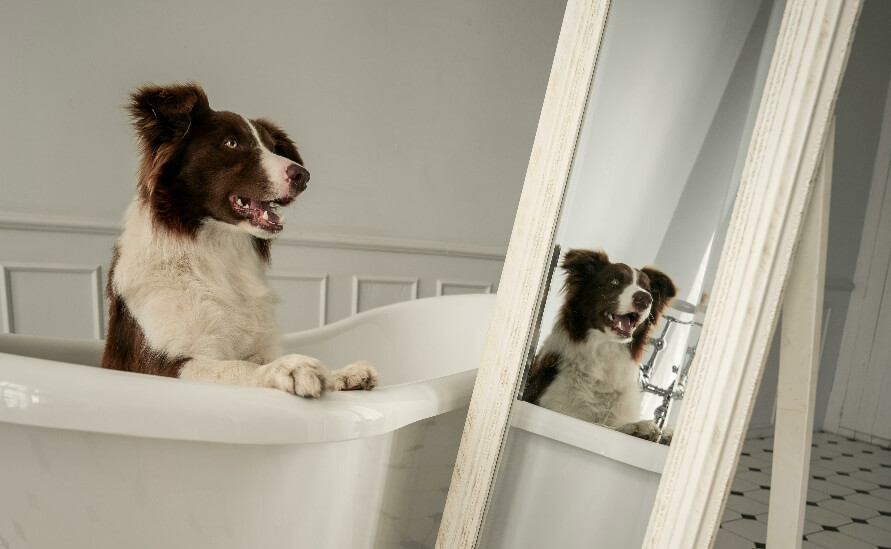
Why Many Dogs Ignore Mirrors Completely
Just as some dogs bark at mirrors, many dogs show little interest in them at all.
Once a dog realizes the reflection does not produce scent, sound, or normal social responses, the image becomes irrelevant. Dogs tend to focus their attention on stimuli that provide meaningful information, such as smells, sounds, and movement.
Because mirrors offer only visual feedback, they may not hold a dog’s attention for long. After a brief investigation, the dog may simply walk away and ignore the reflection entirely.
This behavior is perfectly normal and reflects the way dogs prioritize sensory information.
Signs of Self-Awareness You Might Notice in Your Dog
Even though mirrors are not an effective way to measure canine self-awareness, dogs show many behaviors that suggest awareness of themselves and their environment.
Name Recognition
Most dogs quickly learn to recognize their names. When a dog hears its name, it often turns its head, makes eye contact, or approaches the person who called.
Human Interaction
Dogs are highly responsive to human body language and gestures. Many dogs can follow pointing gestures, read facial expressions, and adjust their behavior based on human reactions.
Memories and Routines
Dogs also display strong memory for routines and locations. Many dogs anticipate daily events such as walks, mealtimes, or the arrival of family members.
These behaviors suggest that dogs possess sophisticated cognitive abilities, even if they do not interpret mirror reflections the way humans do.

How Dogs Actually See the World
To understand why mirrors are confusing for dogs, it helps to consider how canine vision differs from human vision.
Dogs see fewer colors than humans because they have fewer types of color-detecting cells in their eyes. Their world is often described as consisting primarily of shades of blue and yellow. If you are curious about this topic, you can learn more in our article What Colors Can Dogs See? A Look into Canine Color Vision.
Dogs are also better at detecting movement than humans. This ability helped their ancestors track prey and detect threats in the environment.
However, dogs generally have less visual detail than humans. Their eyesight is optimized for motion and low-light conditions rather than sharp focus.
Because dogs rely more heavily on smell and hearing, visual cues alone may not provide enough information for them to interpret complex images like mirror reflections.
Final Thoughts
Dogs can see their reflection in a mirror, but most do not recognize the image as themselves. Instead of relying on vision to identify individuals, dogs primarily use scent and other sensory cues. Scientific research suggests that dogs may possess forms of self-awareness that are better measured through scent recognition, body awareness, and social understanding rather than mirror tests.
While some dogs bark at mirrors and others ignore them completely, these reactions are simply part of how dogs interpret the world using their own unique senses.
Has your dog ever reacted to their reflection in a mirror or window? What did they do when they first noticed it? 🐾
 5 Everyday Ways to Strengthen Your Bond With Your Dog
 How to Protect Your Child From an Unleashed Dog
 7 Ways to Tell Your Dog You Love Them
 Are Dogs Smarter Than Cats?
 Why Do Dogs Chase Their Tails?




Leave a Reply